
PROJECT BRIEF
As part of my third-year studio, I collaborated with Eat Raja, India’s first zero-waste juice bar, to conceptualise and prototype sustainable service solutions that supported business growth while preserving its zero-waste philosophy.
The project reimagined the in-store experience for home consumption, exploring service interventions that enabled customers to engage with the brand remotely while maintaining its distinctive, sustainability-driven customer experience.

Project Type
Service Design, UX, Packaging & Branding
Team
3 Members
Timeline
5 Weeks
PROJECT AT A GLANCE
Research & Problem Discovery
The Three Design Inteventions:
The Delivery Service — The Eat Raja App
The Bio-degradable Packgaging
The Branding
Through interviews and ethnographic studies we discovered that despite Eat Raja's unique zero-waste philosophy, its experience was limited to in-store visitors.
Problem Statement: How might we re-create the experience of Eat Raja remotely in a manner that is scalable and makes sustainability accessible whilst preserving the zero-waste philosophy?
Through service design, we developed a sustainable delivery model combining bicycle deliveries, biodegradable packaging, a buyback system, and a mobile app to recreate the Eat Raja experience at home.
Developed two iterations of baskets: Bamboo and Cardboard; ultimately, Cardboard was developed further for its ease and business viability.
Designed packaging according to flavours and instructions of repurposement. Re-designed Logo and Brand Identity
dESIGN pROCESS
User Interviews
Shadowing
Competitor Analysis
Empathize
Problem Statement
User Personas
Define
Brainstorming
Scenario Mapping
Value Proposition Canvas
Ideation
Paper Prototyping Sketching
Packaging
High Fidelity Wireframes
Prototyping
Mockup Testing
Try-it-yourself Testing
Testing
5 Weeks
1. Empathizing through Research
User Interviews +
FLY-ON-THE WALL STUDY
Research Summarised of 5+ Interviews: Opportunity Areas
Users like Eat Raja enough to travel for it, but wish it were accessible to every location
Users enjoy Eat Raja juices for the presentation as well as the taste
Users are not too aware of the various sustainability initiatives
Users want delivery but are sceptical about how it will be done
Parents bring their children to Eat Raja because it is healthy and a great way to introduce fruits for those who don't like them
Customers are willing to pay a higher price for Eat Raja products

2. DEFINING PROBLEM STATEMENT
USER PERSONAS


Target AUDIENCE

PROBLEM STATEMENT
How might we re-create the experience of Eat Raja remotely in a manner that is scalable and makes sustainability accessible whilst preserving the zero-waste philosophy?
3. SOLUTION IDEATION
rapid brainstroming

4. ITERATION & PROTOTYPING
The Design Interventions
(Click to see each intevention)


THE EAT RAJA DELIVERy APP
4.1 Intervention #1: SERVICE DESIGN & UX
Roadmap to Building a Service


Scenario Mapping
System Mapping
SWOT Analysis
Value Proposition Canvas
Identified questions, considerations and assumptions
Mapped the current System seeing how aspects can be imitated remotely
Identified the weaknesses and pain points of the proposed system
Mapped out current value and pain points to create design interventions
Customer Journey mapp of app (Hover to zoom)

sYSTEM MAPPING FROM CUSTOMER’S POV (Hover to zoom)

BUSINESS MODEL CANVAS

4.2 Intervention #2: Packaging Design
BIODEGRADABLE PACKAGING


Concept behind the Bio-degradable Packaging
This is a 100% Recycled Cardboard Delivery box
The Concept will have two holes acting as holders for the Juice and the Glass Jar with the Refills
The Juice will be Wrapped with a banana leaf tied with cotton twine
The Lid of the box will have a trapping lid to ensure the fruit does not move around, thus no spillage
ITERATION of PACKAGING
Drawbacks:
Doesn’t account for various quantities
It doesn’t account for Bottle’s measurements

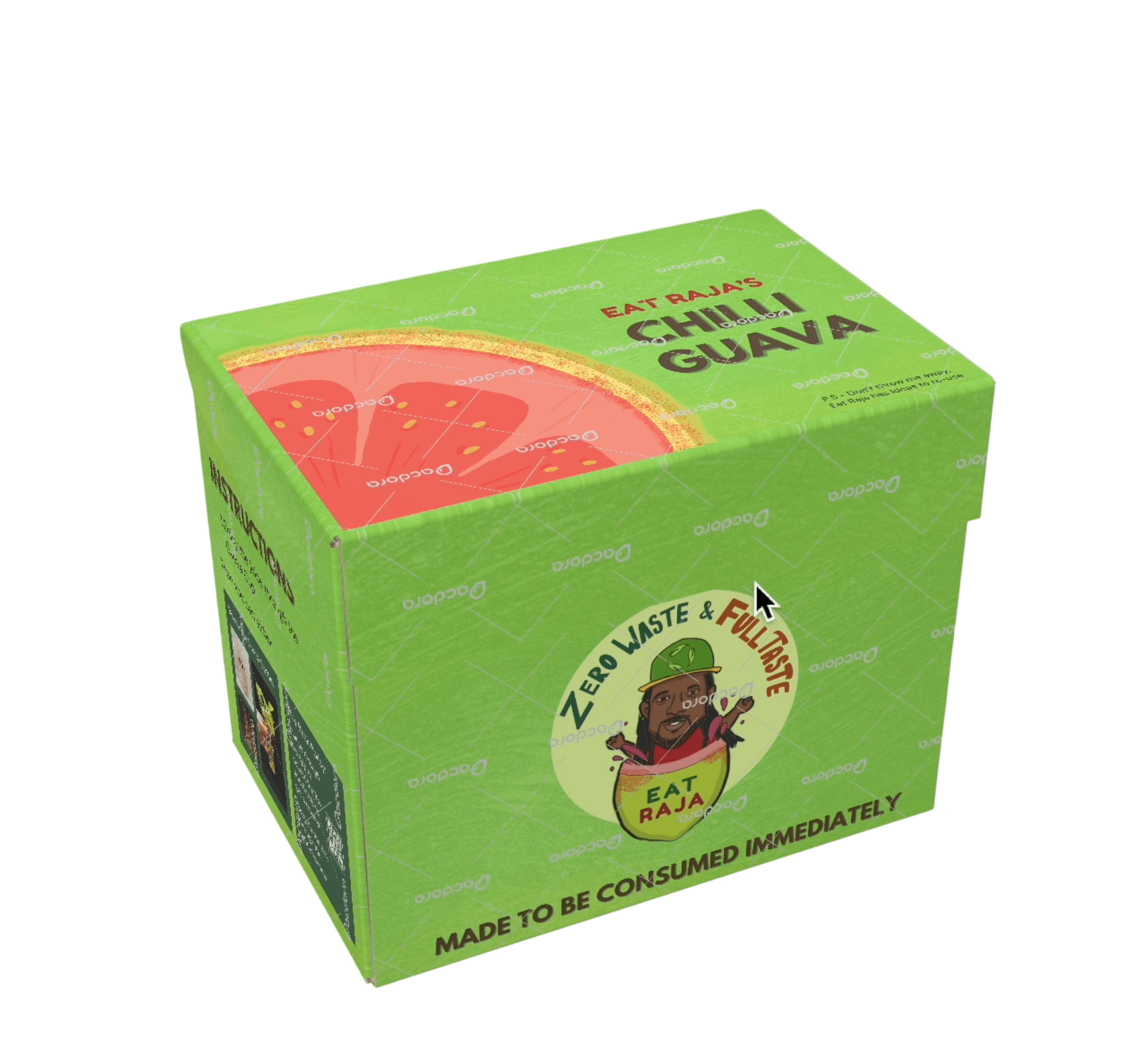
PACKAGING RENDERS


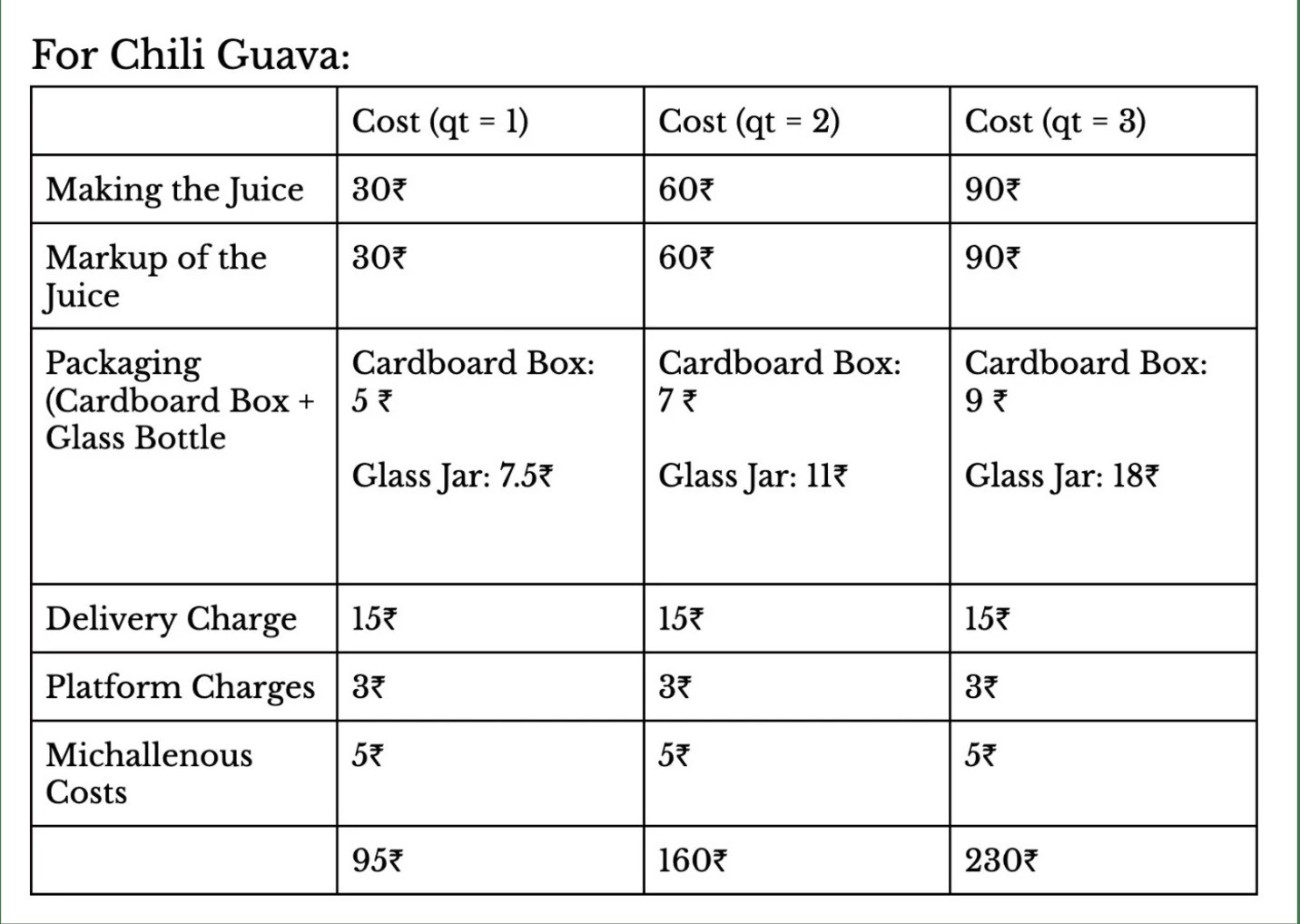
Pricing of Cardboard Box
Verdict: More Viable, especially compared to in market juices on swiggy
More Brandable and has more scope for packaging Design
More Cost Effective
*Delivery Cycles: will be a one-time cost and which is a part of Eat raja’s Personnel
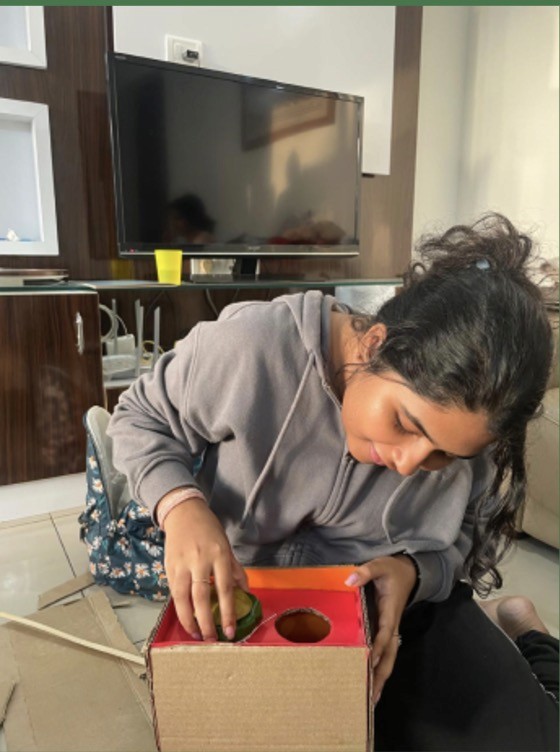
USER TESTING




This is a Bamboo Basket Model that will act as the delivery box.
Features:
It will be lined with Banana Leaves
A Paper Pulp Tray tailored to the fruit size will be Inside the box that will encapsulate guava then wrapped with jute thread
Along with a Glass Bottle for Refills

first idea: the bamboo box


Costs were too high, hence price was also high. Not feasible for Juice
Unsure of Paper Pulp as a Material to Securely hold the juice
How might we make the paper pulp carton without a mould
Why this Idea did not work?
Could Work for cosmetic packaging like perfumes and makeup
Premium brands can adapt this type of packaging for a luxurious yet rustic feel
Marketing to high income/upper middle class background individuals
Where could this Package work?
Pricing of BAMBOO Box
MOCK-UP TESTING

Verdict: Sustainable but not Viable as it is incurring high costs for selling the juice.
This can be fixed if branded and promoted as a premium product
*Delivery Cycles: will be a one-time cost and which is a part of Eat raja’s Personnel
LOGO DESIGN
BRAND ARCHETYPES
Packaging Design

4.3 Intervention #3: Branding
THE eat raja BRAnding
Re-designed Logo
Current Logo
The Outlaw
Eat Raja challenges tradition in the food and beverage industry.
The Everyman
Seeks to connect with people whilst encouraging sustainability
Chilli Guava Top Face of the Packaging
Front Face View
Back Face View


Side Views
Packaging For Other Flavours


WHAT I LEARNT AS A DESIGNER


Balancing user needs with business viability. Our first packaging concept perfectly reflected Eat Raja's zero-waste philosophy, but we soon realized it wasn't practical for the business to sustain. Hence, it is important to adapt ideas so they work for both the user and the business.
Thinking in systems. Mapping the end-to-end customer journey helped us recreate key in-store touchpoints for a seamless at-home experience.
Collaborating effectively. Working in a team taught me the importance of delegation, seeking support, and leveraging diverse perspectives to create stronger design outcomes.