

PROJECT BRIEF
As part of my Pre-Thesis Project on Preventive Care, I explored Occupational Stress among Bangalore Metropolitan Transport Corporation (BMTC) Bus Drivers.
It is an often overlooked issue within the government organisation. Prolonged hours, congested traffic, etc contibuted to heightened physical and psychological strain, and this can lead to chronic health conditions with drivers which affect their well-being, road and passenger safety
Project Type
Service Design, Policy Design
Team
Individual
Timeline
16 Weeks
PROJECT AT A GLANCE
This is a long but deeply meaningful project—one that citizens should be more aware of, to build greater empathy for the BMTC drivers behind the wheel and understand how meaningful solutions can be designed within real-world constraints and challenges.
Impact of the Implementation of the Brake & Breathe Hub

Understanding the System & Uncovering Invisible Lived Realities
Through various design research methods, such as a day-in-the-life study, in which I went on a shift with a BMTC driver, I explored the everyday realities of these drivers where I discovered:
Drivers have to sleep on the bus at night
Drivers have to pay out of their pockets for food and snacks
Lack of designated restrooms, canteens, or safe waiting areas at depots.
Lack of communication and empathy from management
Deep normalisation of hardship
Schedules do not allow them to attend health screenings
Designing Care into the BMTC ecosystem which benefits Drivers, Management & Passengers
After extensive ideation & iteration, it led to the Brake & Breathe Hub — modular rest facilities out of repurposed shipping containers, with a recognition program built in. The features of the Hubs are: Beds for rest, a Canteen for healthy food, a Driver Helpdesk for greivances & Hub Clinic for health checkups
System was developed using frameowrks like feasability analysis, service blueprinting, implentation plans, etc. The final system was then validated with BMTC drivers, depot authorities, healthcare professionals, and an NGO representative, helping assess its relevance, usability, and feasibility while identifying areas for further iteration.
Project Presenatation at NSLU'S 6th IPPA Conference & Venkatappa Art Gallery
Developing & Validating the System: The Brake & Breathe Hub
Skip ahead & View Solution

Understanding & Dissecting the Brief
Empathizing through Research
Defining Problem Statement
Ideation & Iteration
Design & Prototype
Validation & Testing
Validation Interviews
16 Weeks
User Personas
Empathy Mapping
User Journey Map
Force Field Analysis
Prioritization Matrix
Bissociation Ideation Workshop
Crazy 8
Brainstorming
The Disney Strategy
Scenario Mapping
Value Proposition Canvas
Impact/Effort Matrix
Iterations
Developing System
Implementation Plan
Feasibility, Viability, Desirability, Usability
Budgeting
Brand StrategyOutcomes: Model, Floorplans, Campaign, Service Blueprint, Handbook & Infographics
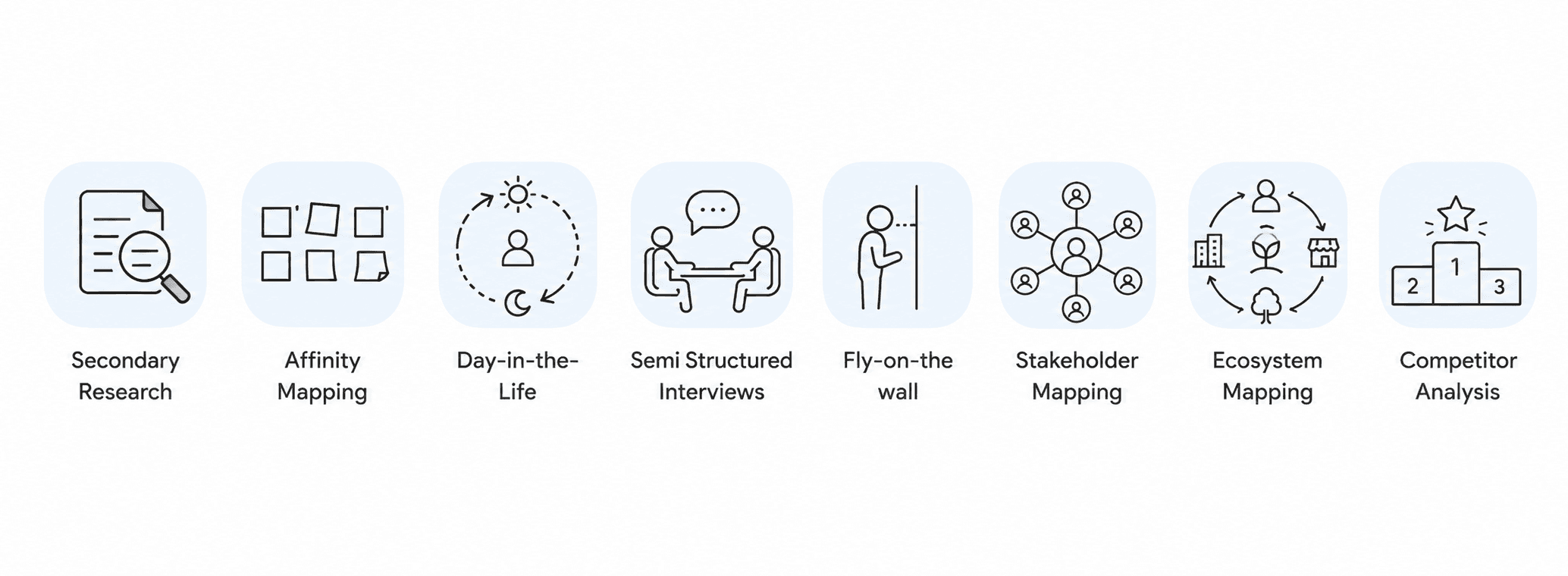
Secondary Research
Affinity Mapping
Day-in-the-Life
Semi Structured Interviews
Fly-on-the wall
Stakeholder Mapping
Ecosystem Mapping
Competitor Analysis
DESIGN PROCESS
01/ The current scenario
The Problem in numbers
(Read about the BMTC here)
65%
“Drivers have to cover a distance of 1 km in just three minutes.”
/235 Drivers are under severe stress

64%
work more than 8 hours a day

62%
/8,200 are severely hypertensive
90%
at high risk for cardiovascular diseases

occupational stress in bmtc bus drivers

Occupational stress is a critical but often overlooked issue within India’s public transport sector, particularly among drivers of the Bengaluru Metropolitan Transport Corporation (BMTC).
Long working hours, congested urban traffic, irregular shifts, and inadequate access to basic facilities contribute to heightened physical and psychological strain.
Prolonged stress manifests in chronic health conditions such as hypertension, diabetes, musculoskeletal disorders, and fatigue, which not only diminish drivers’ well-being but also compromise road safety and service quality.
~ KSRTC Staff and Workers’ Federation Secretary Vijay Bhaskar
The policy-practice gap
Policies implemented by the government vs. their result on ground
Arogya Bhagya Health Card & Hospital Partnerships
Paused due to Budgetary Constraints
Drivers do not get holidays to attend screenings
Delayed claims, low awareness on how to avail
Limited long-term recognition of well-being.
Supports long-term financial security
Temporary closure due to contractual issues
Preventive Medicine Clinics & Health Camps
Accident Relief Fund & Group Insurance
Recognition & Motivation Schemes
Financial Stability & Family Welfare Schemes
De-Addiction Centers
INTENT
REALITY
vs.

02/ Understanding the reality on ground
Shift timings:
Half a Shift broken down in detail:
TRIP TIMINGS

Most Common Shift Pattern. Other Shift timings include General Shift: 7 AM - 7 PM

Conductor Ticket Machine Reported Times of the Journey's made from start to finish of Shift
DAY IN THE Life of a bmtc bus driver
Primary Research:
To get an on-the-ground understanding of the life of a BMTC Bus Driver, I went on the second shift starting from Yelahanka Satellite Town —> Majestic
On this endeavour, I observed and interviewed the Bus Driver and Conductor on how bus drivers' circumstances are like, how that affects their health and well-being, and what factors cause them stress.

A complex ecosystem that affects drivers' wellbeing
Unpredictable break timing due to traffic
3 mins per km - 7-8 hr duty - 110kms
Heavy congestion increases stress and reduces rest time.
Drivers have to pay out of their pockets for food and snacks
No salary increments
BMTC hasn’t paid hosiptals = no service
Lack of designated restrooms, canteens at depots.
Lack of communication and empathy
Unions are not legalised organisations, making it difficult to approach
Shifts Schedules don’t allow them to attend screenings
Drivers get suspended for striking
Deep normalization of hardship — “everyone does it, so we manage.”
Buses health provisions are absent
Irregular eating patterns — skipped or delayed meals
Vision Issues, Colour Blindness
Unhealthy Food Choices due to lack of option
Sleep deprivation due to short rest cycles between shifts.
Monotony in Routine
Research Methods used
Research Findings

Suresh Kumar:
BMTC Driver
Problem/Stressors:
Low Compensation: compared to other states
Heavy Traffic and Narrow Road Driving
Management is not trustworthy

Kishore Shetty :
Depot Manager
Lack of Personnel
Lack of Consistent Care Systems in BMTC
Lack of action from hierarchy
Problem/Stressors:

Ramesh Gowda:
BMTC Driver
Problem/Stressors:
False Promises of Health Benefits
Sleeping on Buses → Back pain
High Stress Environment: Roads
No Support and Care from BMTC
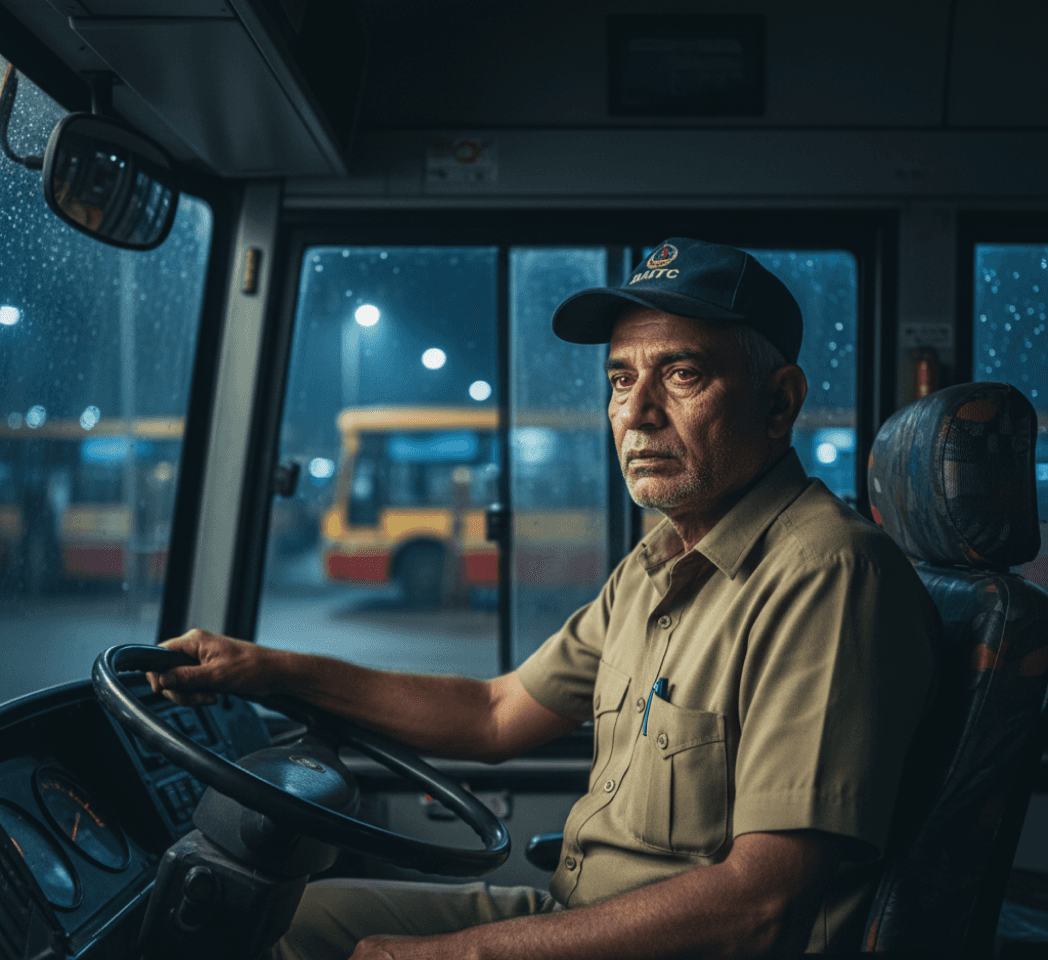
Lingappa:
BMTC Driver
Problem/Stressors:
No Support in Crises
Inconsistent Policies
Physical Fatigue
Mental Burnout

Hariharasudhan:
BMTC Driver
Problem/Stressors:
Sleep Deprivation
Physical Exhaustion
Institutional Neglect
Lack of Rest Facilities
User Personas
Drivers feel extremely undervalued by Management
Drivers are overworked and fatigued from driving through traffic & sleeping on the bus
They have normalised the working conditions because they do not see actionable change from the BMTC
Drivers have to pay out of their pockets when having any meals or snacks whilst on duty, increasing their personal expenditure
Conlcusions from Research
03/ Design Opportunity
How might we create accessible and stigma-free health support that encourages BMTC drivers to prioritize their well-being?
The Problem Statement
Care is acknowledging the unseen struggles behind the wheel.
Care is empathy for drivers turned into action.
Care is bridging the gap between drivers and management.
Care is when drivers are recognized as essential citizens of the city’s movement.
Care is designing systems that listen, support, and restore dignity.
Caring for BMTC Bus Drivers should look like…
04/ From Many Ideas to a systemic solution


Through Methods like Brainstorming, Bisassiocation Workshop, and Disney Strategy, I came up with 30 + ideas, these were my four primary ideas that would best fit the needs of the BMTC Bus Drivers
with facilities to help them rejuvenate during shift, providing services by BMTC such that drivers do not have spend out of pocket
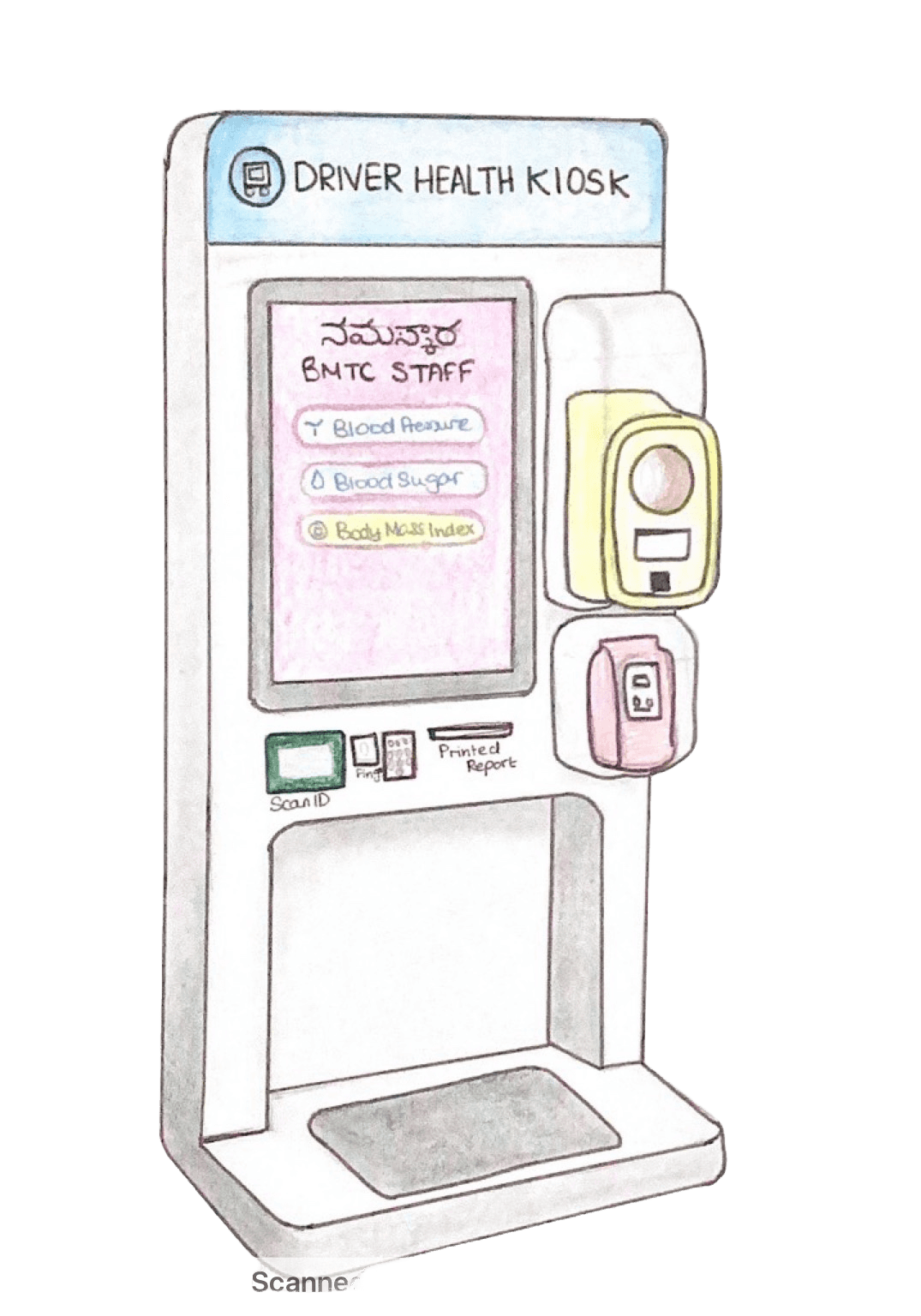
to check BP, sugar levels to ease access to clinics whilst on duty, to catch health concerns before getting behind the wheel
where drivers can easily communicate and put out their grievances and hardships
incentivisting depots to maintain driver well-being based participation in check-ups and healthy snacks.
Making Depots Bus Driver Friendly --> Modular Wellness Depot Hubs
Kiosks built into the buses and depots
Greivence Redressal Network for Bus Drivers
Healthy Depot of the Month Initative
+
IDEATION + ITERATION
Implementing Modular Wellness Hubs that act as
rest facilities providing beds, canteens, clinic
To ensure management participation and accountability, through healthy competition each depot hub will ranked based on cleanliness, care for drivers, staff and other parameters
Combination of Modular Wellness Depot Hubs + Healthy Depot of the Month

Reason #4: Long-term solution requested by drivers → which will keep the city safe and drivers healthy
Reason #3: Recognition program → having drivers as a feedback gives drivers significance in this system
Reason #2: Bridges drivers and BMTC together → something that drivers and management feel hostility about presently
Reason #1: Instills a preventive health mindset in drivers → tackling the dismissal of health
Final Selected Idea + Reasoning
After finalising the idea, the real questions were how to make this initative actually executuionable, Something the government copuld acutally implement, which is feasible, famillar and beneficial to all parties involved. I created this mapping to understand what are hindrances from this initative coming to life.
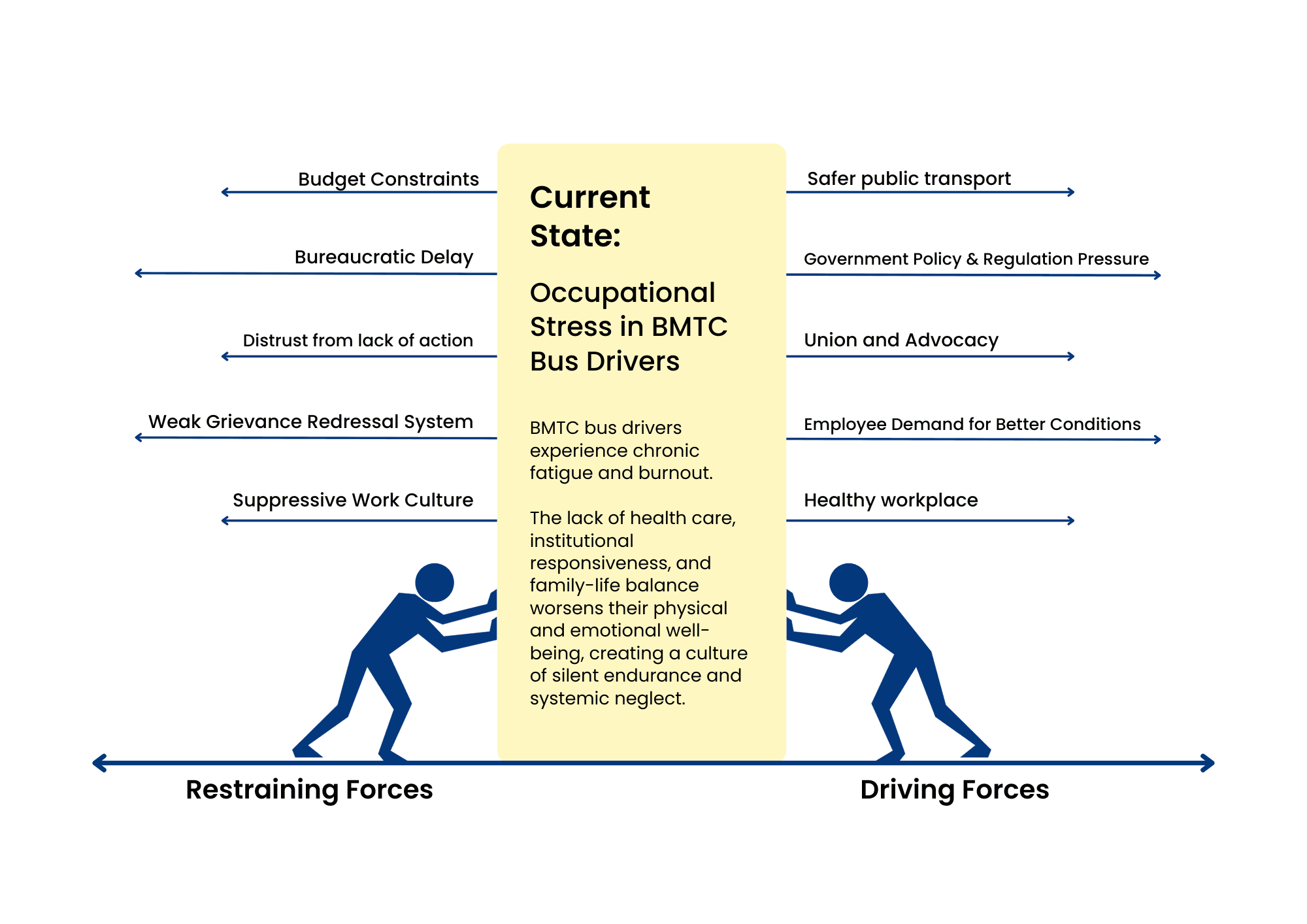
Force Field Analysis - Understanding the Constraints


THE BRAKE & BREATHE HUB
ಮುಂದಿನ ನಿಲ್ದಾಣ... ನಿಮ್ಮ ಅರೋಗ್ಯ!
Modular Rest Spaces for Bengaluru’s BMTC Bus Drivers + Recognition Program “Healtiest Depot Hub of the month”
Implementing Tiered Modular Wellness Hubs Initiative by repurposing shipping containers into rest facilities for BMTC Drivers to promote health & wellness.
To ensure management participation and accountability, through healthy competition each depot hub will ranked based on cleanliness, care for drivers, staff and other parameters

05/ thE DESIGN INTERVENTION
These Modular rest facilities will be built by repurposing shipping containers. Shipping containers were chosen because :
Cost Effective
Spatially Effective
Can be stacked and removed
Different Bus Depots across the city vary in size and volume of drivers it houses hence the iniative has been divided in Tier 1 & Tier 2
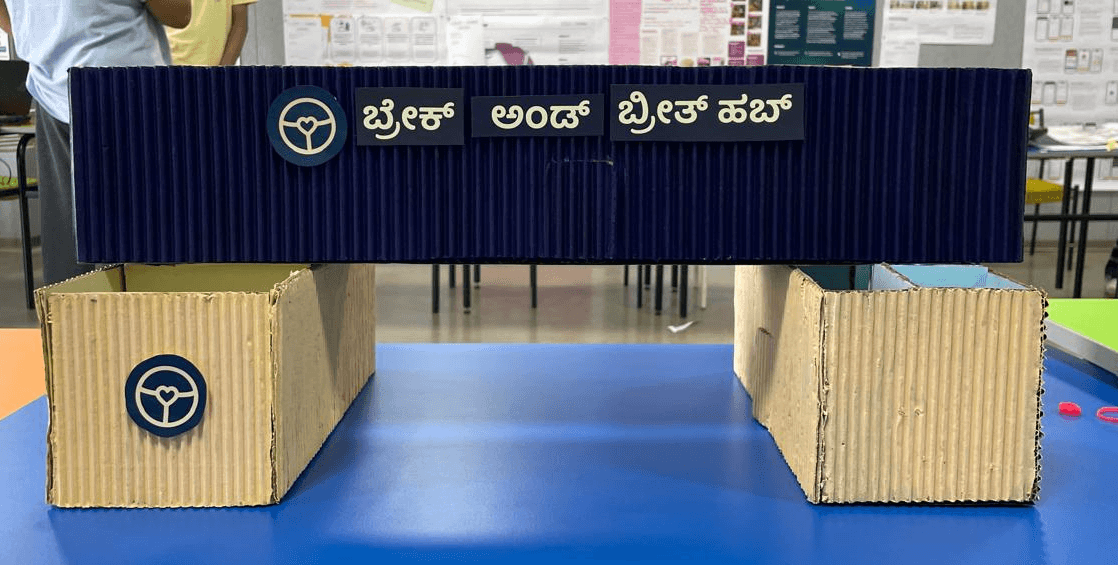
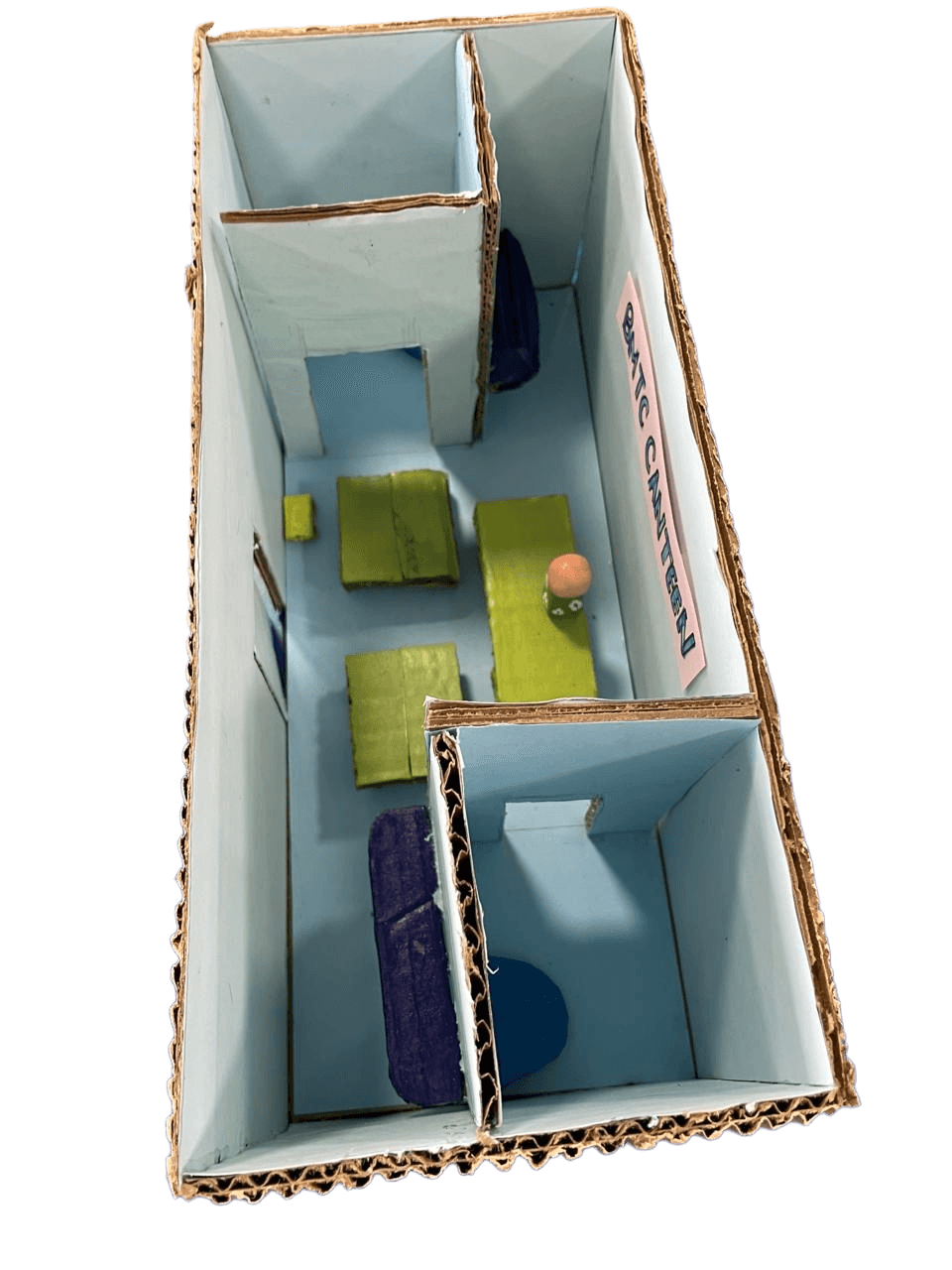
Tier 1 Depot Hub
Main City Depots like Shantinagar, Majestic, Jayanagar, etc. will be Tier 1 Depots
(1 x 40ft + 2 x 20ft containers)
Key Points:
A driver will always touch a tier 1 depot as the routes are designed such
Tiered system has been proposed to lessen the financial and administrative burden on management
Beds for Rest
Driver's Helpdesk
Hub
Clinic
NGO
Canteen

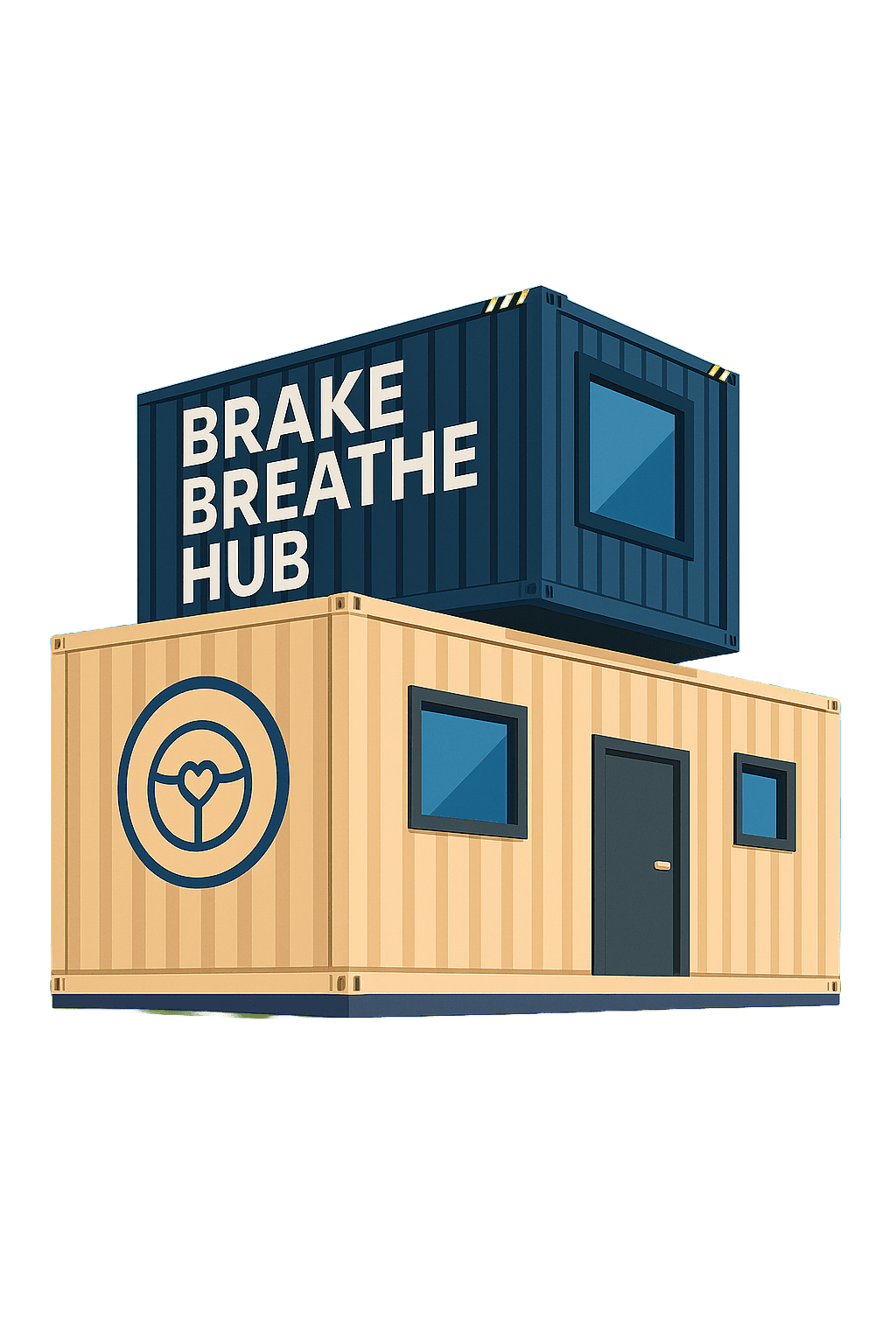
Tier 2 Depot Hub
Smaller depots in the city, like Kalyanagara, Hebbal, etc will be Tier 2 Depots
(1 x 40ft + 1 x 20ft containers)
Beds for Rest
Driver's Helpdesk
Hub
Clinic
How will it work?
FIRST-OF-ITS KIND MODULAR SOLUTION FOR THE BMTC Tier 1 Hub Vs. Tier 2 Hub
Beds for Rest
Driver helpdesk
Hub CLinic
Bunk Beds for Drivers to sleep in instead of sleeping on buses
it will reduce back pain and prevent musculoskeletal diseases


Supportive environment for drivers to convey their hardships of duty to management.
Basic Clinic for self checkup and doctor checkup, easing access to BMTC healthcare services. Drivers do not have to go till main city to avail clinic service


NGO X BMTC Healthy Canteen - Only at Tier 1
Providing nutritious with NGO food at small price (partial-subsidy model), This Canteen aims to save money for the drivers, easing access to healthy food whilst on duty.
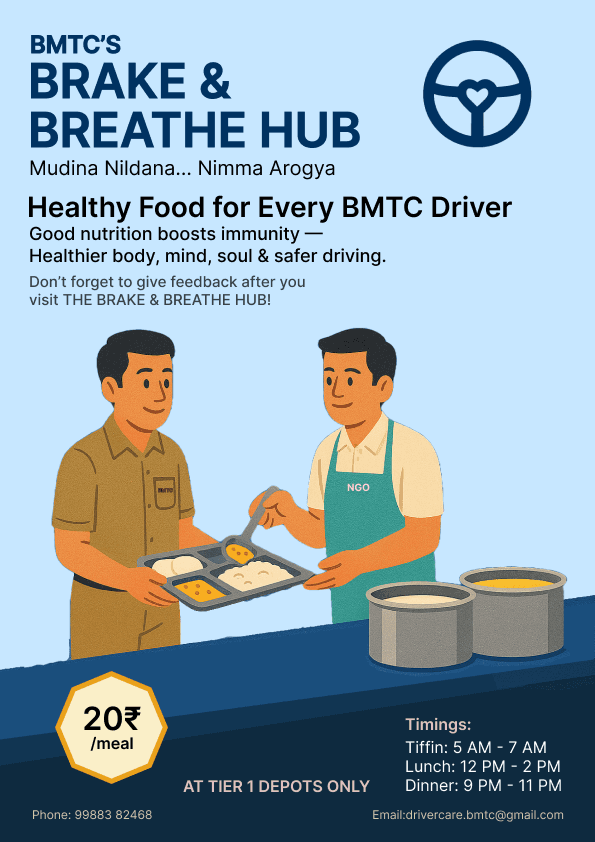
Driver will use tokens. The NGO will deliver the food to the Brake and Breathe hub where it would cost approx 50₹ per meal where 30₹ is subsided.
This is a menu curated in collaboration with Dr. Meghana from Arogya World - south indian, protein rich, body-cooling diet.
A driver touches a Tier 1 depot at some point of their duty, hence canteen will be accessible to everyone


Features: Inside the Brake & Breathe Hub

A monthly recognition program that celebrates BMTC depots demonstrating exceptional commitment to driver health, hygiene, and wellbeing.
Drivers will be asked to give feedback about services provided
This will be collected to rank the best TIER 1 AND TIER 2 Depots and they will be awarded as the healthiest depot, this motivates consistency and care for the management
Depots will be ranked based on Quality of Service, Accessibility of Service & Driver Happiness
Concept Overview
Healthiest Depot Hub of the Month Award
Features: Outside the Brake & Breathe Hub
The Handbook is designed to teach and inform Drivers on how to act and take care of themselves on the road during difficult situations to safeguard their health and well-being.
Driving with Care: The BMTC Driver Handbook
The Brake & Breathe Hub Campaign


06/ thE sYSTEM AND SERVICE POWERING THE INTERVENTION
VISUALISED SERVICE BLUEPRINT

IMPLENTATION PLAN

BMTC has been looking into implementing such initiatives as mentioned in the annual Adminstrtaive report and news articles
Stakeholders involved are mutually benefitted from this initiave making it an attractive investment
Through CSR and NGO Partnerships, like exiting interventions in Imida, this initiative can be a reality
Requires consistent monitoring/scoring. Dependent on the depot manager participation
Bureaucratic Delays in implementation
Stigma around rest or health check-ups (slow change)
Feasibility, Viability, Desirability, Usability Analysis
07/ BRANDING THE initiative
To create a culture of dignity, wellness, and care for BMTC’s drivers by transforming depots into spaces of health, rest, and recognition. The initiative empowers those who move the city forward through consistent support and meaningful acknowledgment.
The Brake & Breathe Hub
Brake = Stopping for safety
= Break
Mundina Nildana... Nimma Arogya
Next Stop...
Your Health
Driver’s Steering Wheel with care woven into it
Breathe = Slowing down
= Self Care
The Caregiver
Brand Vision
Initiative Name
Slogan
Logo
Colour Scheme
Brand Archetypes
Brand Values
The Everyman
Health & Well-being
Care
Support
Empathy


bRANDING
08/ MEasuring sucess of the design intervention
I tested by simulating the experience of the depot through my model and my floor plans for the drivers and a Depot administrative manager. They were not open to pictures whilst testing due to fear of repercussions from the management. I did try to get in touch with an IAS officer from the BMTC, through Arogya World, however, due to bureaucratic reasons, it was not executed.

Archana Raaj,
Arogya World NGO
Dr. Meghana
Driver 1:
Driver 2:
Driver 3:
BMTC Depot Staff 1:
Innovative, helpful, and needed by drivers
She expressed that Arogya World has been looking to collaborate with BMTC to improve diabetic health
Liked the modular solution of a shipping container.
Approved the NGO's delivery model for providing food to the BMTC canteen and The Menu Crafted for the Canteen
saying these are cost-effective, preferred by the south indian menu provided
He really liked the idea
he wanted accessible canteens
felt recognised as a driver.
He was happy that there is a easier way to approach management.
He said that this hub would not need to provide snacks because no driver is at a depot at that time,
lunch would probably be the most under utilised meal because thats when they get off work to go home
He said he wished the BMTC would implement something along these lines
useful for drivers on duty
relieve existing back pain from sleeping on the bus
Whilst he liked the idea, he wasn’t completely sold because based on the BMTC’s priorities they may not implement this soon enough
He liked the canteen aspect the most, because it eases access to food on the job and its healthy
The Depot admin manager really like the aspect of modular containers
He believes that they can be done because he has seen similar interventions like this before
BMTC is actually looking into investing in initiatives like this, as they say it is in just break-even
TESTING & VALIDATION
How might we create accessible and stigma-free health support that encourages BMTC drivers to prioritize their well-being?
Problem Statement:
Before the Brake & Breathe Hub
After the Brake & Breathe Hub
Limited Rest Facilities Available
For Meals, they would eat at local street canteens with unhealthy food
Drivers found it difficult to convey their grievances to management
If Drivers wanted to go to BMTC clinic they would have to go to Shantinagar, and there were no dedicated holidays for doing so
Struggles of drivers were not acknowledged, welfare implemented also was inconsistent to their needs
Dedicated Rest Spaces for Drivers
Healthy food at a cheaper cost that empower better health
Accessible Medium for drivers to share their hardships with the management
Clinic is now at Home Depot, easily accessible and encourages health awareness
Welfare that Drivers want!
Validated by 3 Drivers, 1 Admin, 1 Doctor, 1 NGO Manager




accessible, dedicated,
health and well-being support system for the drivers
IMPACT OF THE BRAKE & BREATHE HUB
Benefits of implementation for the BMTC
09/ THE 16 WEEK JOURNEY
Project Documentation
10/ The Display


EXhibtion at Venkatappa Art Gallery

Read my paper here: Designing Care in Indian Urban Public Transport Systems: A Service Design-Led Approach to Addressing Occupational Health in BMTC Bus Drivers
Presentation at 6TH ANNUAL IPPN CONFERENCE
11/ Refelction
WHAT I LEARNT AS A DESIGNER

Design With, Not For: Participatory design taught me the importance of involving stakeholders throughout the process. Going on the ground and immersing myself in their context helped me move beyond assumptions and understand the realities shaping their needs.
Immerse to Understand: First-hand observation and engagement revealed nuances that could not be captured through research alone. Being present in the environment helped me design for the reality, not just the brief.
Work Within Constraints: Constraints are often unavoidable, but they do not have to limit the possibility of change. Through continuous research, iteration, and refinement, I learnt to develop solutions that work within existing limitations and can be introduced gradually and realistically.